Methods and testing
This page documents how the numbers on this site are produced and checked, so a reader can judge how far to rely on them. The site is operated by Nate and Kait LLC. Corrections go to [email protected].
One engine produces every number
The calculator, every time table in the guides and every printable chart are generated by the same calculation engine, currently version 2.5.0. No time or temperature in a guide is typed by hand. The engine covers 61 foods.
For meat, poultry and fish it combines two calculations. The first models how long the center of a piece takes to come within 1°F (0.5°C) of the bath, using the heat-through tables in Douglas Baldwin's guide. The second finds how long the food must be held at that temperature to pasteurize, using Baldwin's pasteurization tables and, for chicken and turkey, the USDA FSIS tables. The minimum time shown is the longer of the two, rounded up. Each food also carries a best window and a maximum, set from published recipes and texture notes.
What the tests check
The engine has an automated test suite of 131,478 checks. It passes with no failures. The checks include:
- All 600 cells of Baldwin's heat-through and pasteurization tables. The engine's value is never shorter than the published value for the same temperature and thickness.
- The 29 rows of the FSIS meat table, used as a cross-check, and the 60 values read from FSIS tables 3 and 4 for chicken and turkey.
- Every food, doneness and thickness combination, so a time cannot be shortened between versions without a test failing. Earlier versions' minimum times are stored and compared with the current ones.
- The calculator on the page against the engine in code, for every food and doneness, plus keyboard use, unit toggles, and layout at a 360 pixel screen width.
How the sources were read
Baldwin's tables were read twice from the page itself in a browser by two separate reviewers, with no differences. The FSIS poultry tables are images in a PDF, so two reviewers read them by eye, independently, and also found no differences. The Serious Eats pages and the FDA Food Code were read directly. FoodSafety.gov, Anova Culinary and Amazing Food Made Easy were read through a tool that returns a summary, so values that rest only on those pages are treated as less certain, and the project's source list marks each one.
Several rules are this site's own, because no published table covers them: the extra time for food cooked from frozen, the minimum time for fish at settings that do not pasteurize, and the 2 hr 30 min limit at 130°F (54.4°C) and below. The result says so wherever they apply.
How the guides were checked
Each guide was written from the engine's output for its food. A second reviewer then checked every guide against the engine, opened the outside pages it cites to confirm that they support the claims, removed or re-sourced claims that they did not, and checked each internal link. Where reviewers found a mistake in a guide or in the engine, it was corrected and the engine tests were run again.
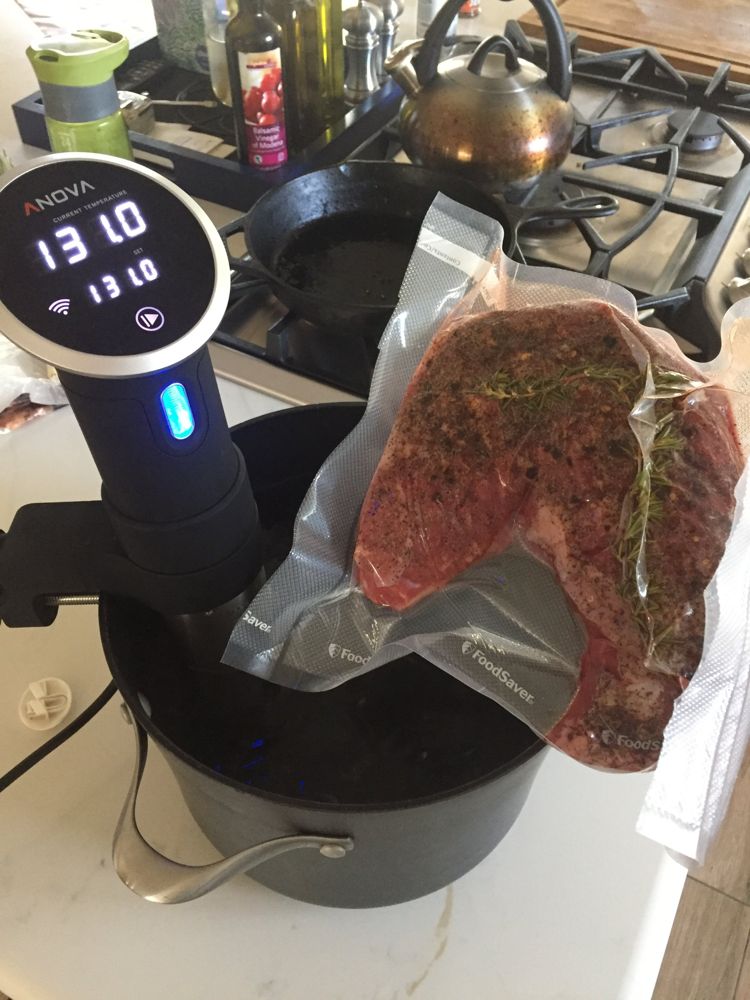
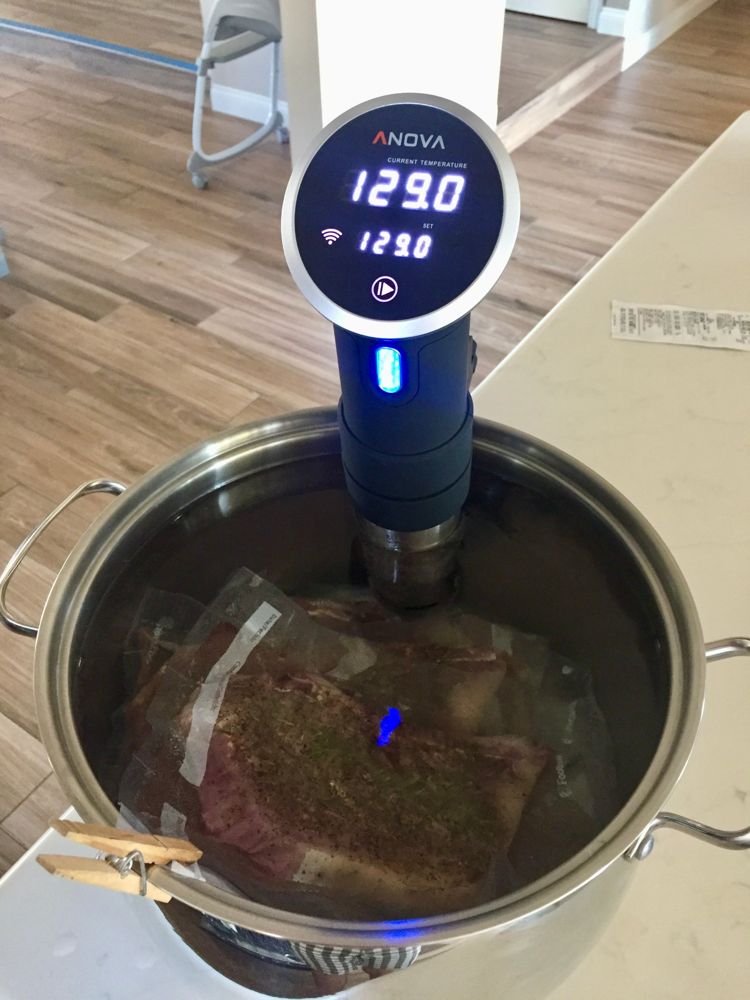
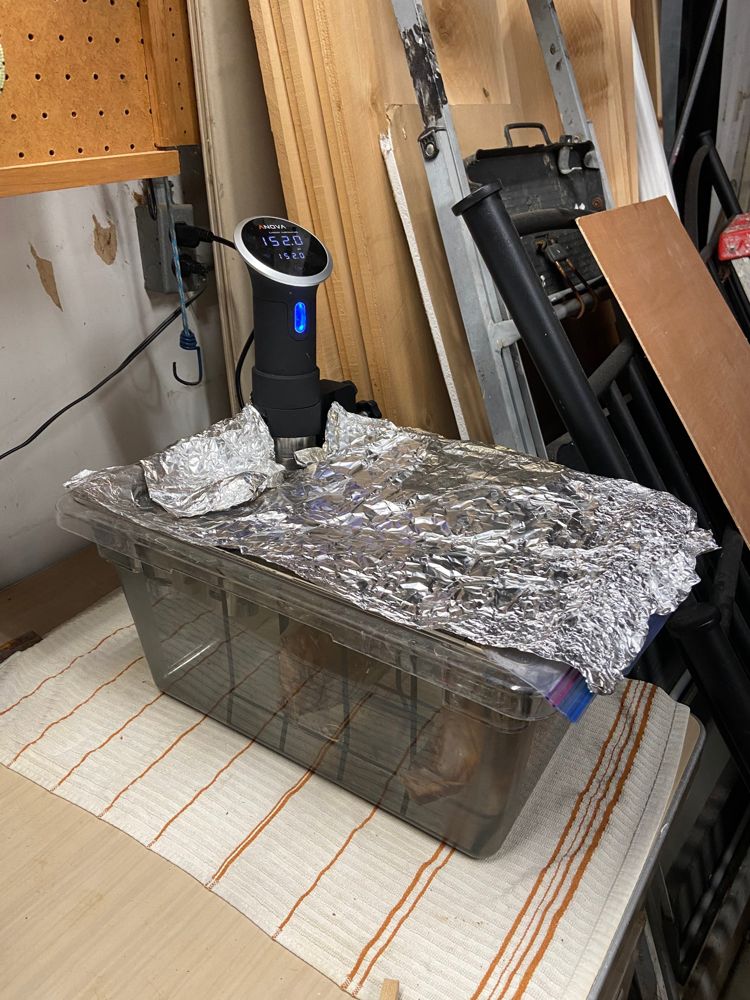
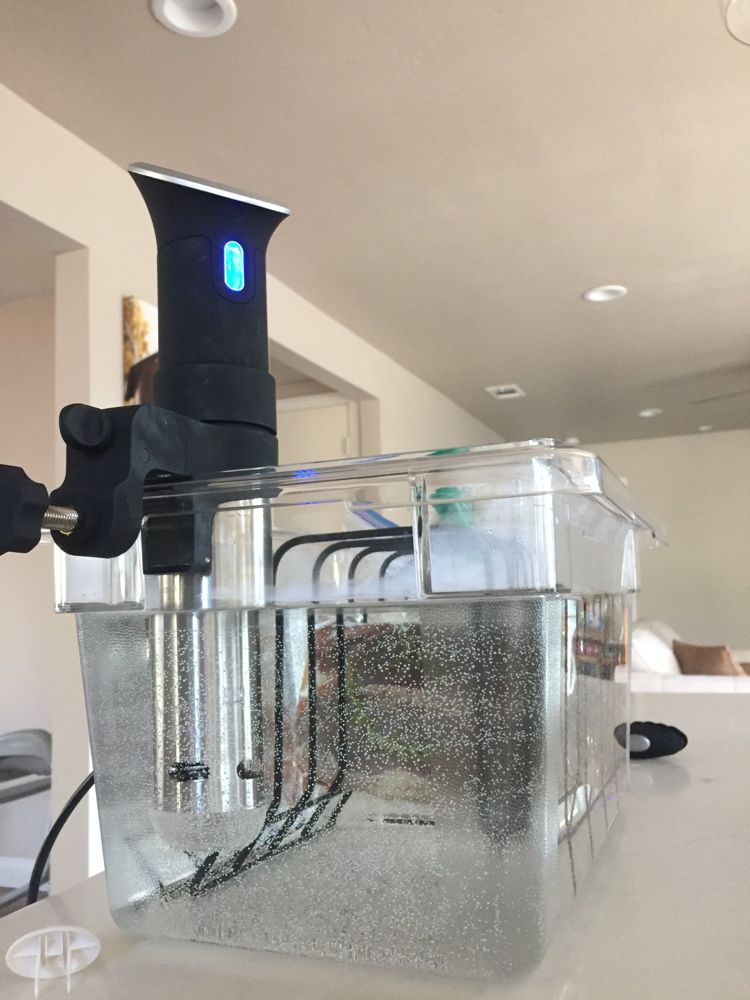
Photos of the bath setup
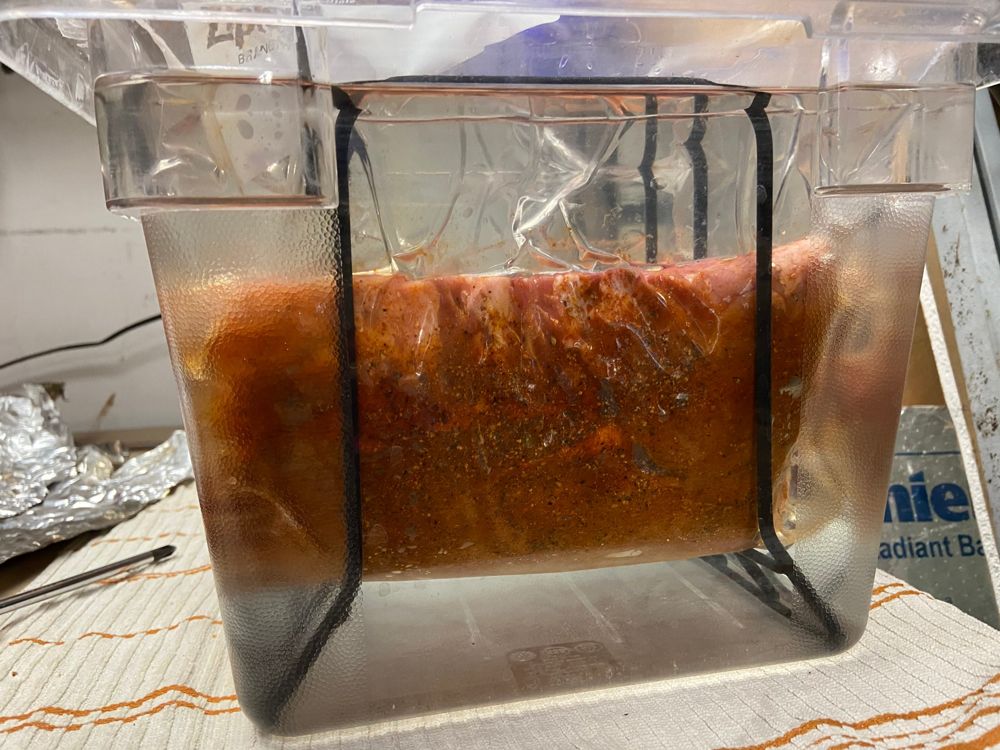
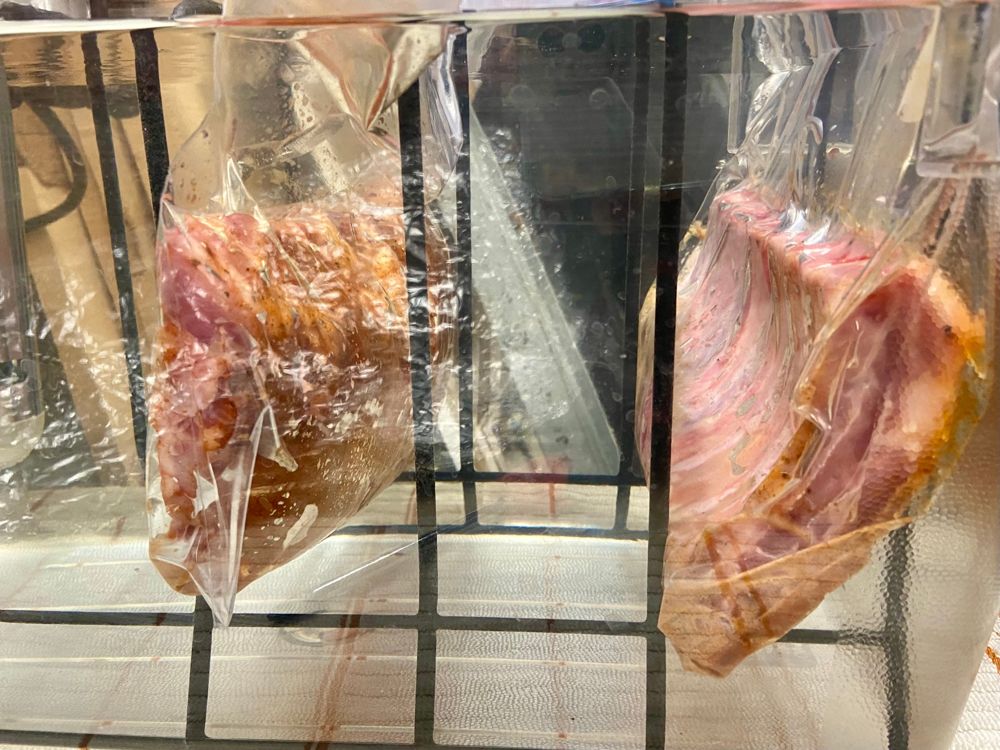
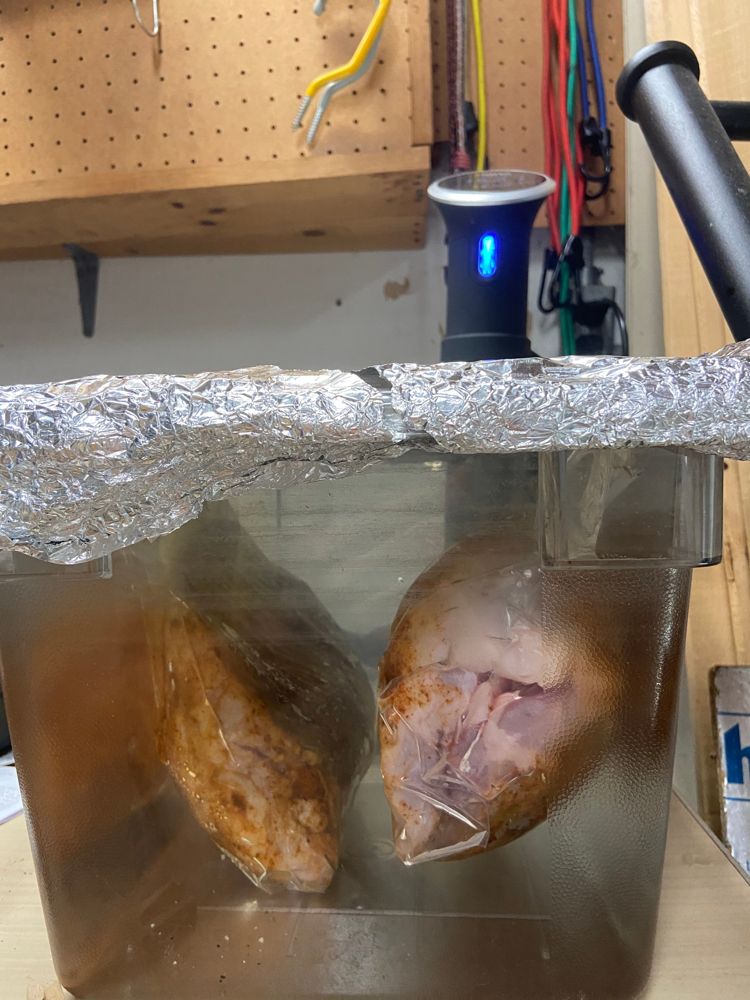
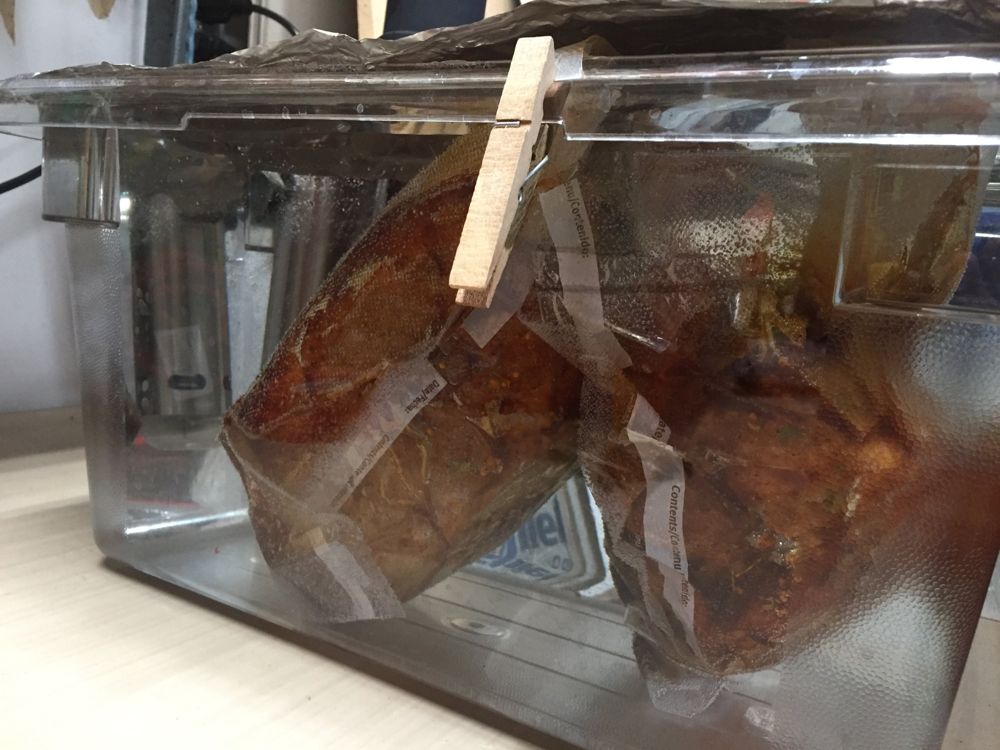
These photos show bath setups: circulators, bags and containers. The captions give the readout or arrangement visible in each photo, not a result for any food.
What this site has not done
The times are calculated and checked against published tables. They are not the result of cooking and measuring each food in a controlled test on this site, and the guides do not report results from individual cooks. Results in your kitchen depend on your equipment, the thickness and starting temperature of the food, and the quality of the food.
If you find a time that looks wrong, contact us. See also the about page and the privacy policy.